
In the annals of aviation history, certain names stand out for their pioneering spirit and remarkable contributions to the field. One such figure is Robert Stanley, an aviation engineer, test pilot, and innovator whose work has had a lasting impact on the development of modern aircraft. While his name may not be as universally recognized as some of his contemporaries, Stanley’s legacy in aviation is profound, and his contributions continue to influence the industry today.
Early Life of Robert Stanley and his Passion for Flight
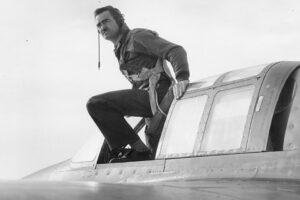
Robert Milton Stanley was born on August 19, 1912, in Cañon City, Colorado. From a young age, Stanley exhibited a keen interest in engineering and aviation, inspired by the rapid advancements in aircraft technology during the early 20th century. He pursued his passion by studying mechanical engineering at the U.S. Naval Academy, where he graduated in 1933. Afterward, he began his career as a naval aviator, which laid the groundwork for his future contributions to aviation.
Contributions to Jet-Powered Flight
Perhaps Robert Stanley’s most significant contribution to aviation was his role in the development and testing of jet-powered aircraft in the United States. In the early 1940s, as World War II raged in Europe, the U.S. military recognized the need to explore new technologies that could give them an edge in the conflict. Jet propulsion was one such technology, and Stanley was at the forefront of its development.
In 1942, Stanley became the first American to fly a jet-powered aircraft when he took the Bell XP-59A Airacomet on its maiden flight. The XP-59A was the United States’ first jet aircraft, and Stanley’s successful test flight marked a significant milestone in aviation history. His courage and skill as a test pilot helped to demonstrate the feasibility of jet propulsion, paving the way for the development of more advanced jet-powered aircraft in the years to come.
Stanley’s work with the XP-59A was just the beginning. He continued to contribute to the advancement of jet technology throughout his career, working closely with engineers and designers to refine and improve the performance of jet engines and airframes. His efforts were instrumental in the rapid evolution of jet aircraft during the 1940s and 1950s, a period that saw the transition from propeller-driven planes to high-speed jet fighters and bombers.
Engineering Innovations and Leadership of Robert Stanley
In addition to his work as a test pilot, Robert Stanley was also a gifted engineer and inventor. He held several patents related to aircraft design and engineering, including innovations in control systems and aerodynamics. His technical expertise and inventive mind allowed him to contribute to a wide range of projects, from military aircraft to civilian aviation.
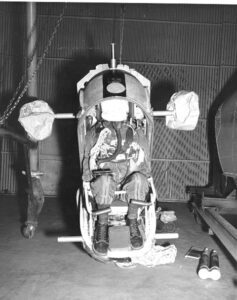
Several prototype systems developed by Stanley Aviation included innovations aimed at improving pilot comfort and safety during long missions. One such system featured a seat with multiple ergonomic adjustments to minimize pilot fatigue. Another notable design was the seat for the Ryan VTO aircraft, which needed to take off and land vertically. This seat could tilt forward significantly, providing the pilot with improved visibility during vertical operations.
The Stanley Aviation Canopy Capsule was an advanced design that positioned the pilot in a supine posture, encapsulated within the windscreen area to protect against windblast. This innovative approach offered enhanced protection and comfort during high-speed flight.
Stanley also developed the Supersonic Capsule, initially intended for the Convair B-58 Hustler. Unlike the Canopy Capsule, this design was more conventional, featuring a seat enclosed by a clamshell-like cover and equipped with special stabilizing devices. The capsule created a shirtsleeve environment for the crew and could be pressurized in the event of cabin pressure loss at high altitudes, allowing the aircraft to be safely controlled to a lower altitude where the capsule could be reopened. Additionally, the capsule included a comprehensive survival kit and could act as a raft in the event of a water landing. The Supersonic Capsule underwent extensive live testing with chimpanzees, bears, and humans, making it one of the most thoroughly tested systems of its time. (During that period, live testing with animals was common in many industries, including aviation. Today, computer simulations and instrumented mannequins have replaced the use of humans and animals in ejection test programs.)
Another unique design from Stanley Aviation was the YANKEE extraction system, used in the Skyraider, a large propeller-driven aircraft. This system utilized a catapult-launched extraction rocket that pulled the aircrew from the cockpit via a tether, automatically deploying the parachute at the end of the rocket’s burn. The YANKEE system was ideal for retrofitting in cockpits with limited space for a traditional ejection seat. It was also tested in other configurations, including one for larger aircraft with small crews, such as the AC-47 and AC-130 cargo/attack planes. In these scenarios, multiple rocket units would be mounted near a hatch, allowing crew members to attach themselves and be extracted one after another. A similar method was considered for crew extraction from the NASA Space Shuttle.
In addition to these systems, Stanley Aviation also manufactured ejection seat trainers, contributing further to pilot safety and training.
Stanley’s leadership was also evident during his tenure as the Chief Test Pilot and later as the Chief Engineer for Bell Aircraft Corporation. Under his guidance, the company made significant strides in aircraft design and production, contributing to the success of numerous military and commercial aircraft programs. His ability to bridge the gap between engineering and piloting made him a unique asset to the aviation industry, as he was able to provide valuable insights from both perspectives.
Legacy and Impact of Robert Stanley
Robert Stanley’s contributions to aviation extend far beyond his role in the development of jet-powered flight. His work laid the foundation for the modern jet age, influencing the design and performance of aircraft that would dominate the skies in the latter half of the 20th century. His pioneering spirit and dedication to advancing aviation technology have left an indelible mark on the industry.
Today, Stanley is remembered as a visionary who played a crucial role in one of the most significant technological leaps in aviation history. The jet aircraft he helped to develop revolutionized air travel, making it faster, more efficient, and more accessible to people around the world. His legacy lives on in every jet aircraft that takes to the skies, a testament to his contributions to the field he loved so much.
Wrapping it Up
Robert Stanley’s story is one of passion, innovation, and courage. His work as a test pilot and engineer helped to shape the future of aviation, pushing the boundaries of what was possible and setting the stage for the jet-powered world we live in today. As we celebrate his contributions, we are reminded of the importance of innovation and the impact that one individual can have on the course of history.
Stanley’s legacy is a reminder that the advancements we take for granted today were made possible by the vision and determination of those who came before us. His contributions to aviation continue to inspire new generations of engineers, pilots, and aviation enthusiasts, ensuring that his influence will be felt for many years to come. Well that’s a wrap, until next time remember to Be Social, Fly Private!







 Embraer is a Brazilian aerospace company that produces commercial, military, and executive aircraft. Its private jet division, Embraer Executive Jets, focuses exclusively on the production of business jets for the private and corporate aviation market. Embraer Executive Jets offers a range of private jet models to suit the needs of various customers. These include the entry-level Phenom 100, the light Phenom 300, the midsize Praetor 500 and 600, and the large Legacy 650E. The Phenom 100 and Phenom 300 are popular choices for first-time private jet buyers or those looking for a cost-effective option. The Praetor 500 and 600 offer a balance between size, range, and speed, making them ideal for longer flights or those requiring more space. The Legacy 650E is Embraer’s largest and most luxurious private jet, capable of seating up to 14 passengers and traveling up to 3,900 nautical miles. In addition to offering a range of private jet models, Embraer Executive Jets provides a suite of services to support its customers. These include aircraft management, maintenance, and pilot training. Embraer’s customer support team is available 24/7 to assist with any issues that may arise.
  The Embraer Phenom 300 Executive Jets
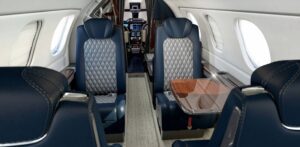 The Embraer Phenom 300E is the upgraded version of the popular Phenom 300 light business jet produced by Embraer Executive Jets. The 300E model features several advancements and improvements over its predecessor, including: Enhanced Avionics Suite – The Phenom 300E is equipped with an advanced Collins Aerospace Pro Line Fusion avionics suite. The system features a touch-screen cockpit display and an intuitive graphical user interface, which simplifies the pilot’s workload and improves situational awareness. Upgraded Cabin – The cabin of the Phenom 300E has been redesigned to offer greater comfort and flexibility. The aircraft features new seats with improved cushioning, adjustable headrests, and retractable armrests. The cabin also has an advanced air management system that reduces noise and vibration, and a high-speed Wi-Fi system that enables passengers to stay connected while in flight. Increased Range – The Phenom 300E has a maximum range of 2,010 nautical miles, which is the same as its predecessor. However, the aircraft’s fuel efficiency has been improved, allowing it to travel further with the same amount of fuel. Upgraded Engines – The Phenom 300E is powered by two Pratt & Whitney Canada PW535E1 engines, which provide improved performance and fuel efficiency. The engines also meet the latest noise and emissions standards, making the aircraft more environmentally friendly. Improved Maintenance Program – Embraer has introduced an advanced maintenance program for the Phenom 300E, which includes predictive maintenance technology that enables operators to anticipate maintenance needs and minimize downtime. The program also features an online portal that allows operators to monitor the aircraft’s maintenance status and schedule service appointments.
 Textron Aviation is an exceptional aircraft manufacturer that offers an impressive range of private planes for air charter. Their commitment to quality and innovation is evident in their aircraft designs, which are sleek, modern, and equipped with advanced technology. They offer a diverse range of private planes suitable for various travel needs. Whether you need a plane for business travel or leisure, Textron Aviation has a plane that can meet your requirements. The comfort and luxury of their private planes are unmatched. The cabins are spacious and well-appointed, providing a comfortable and relaxing environment for passengers during their flights.
 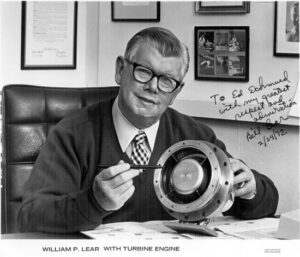 The Learjet company became known for designing and manufacturing high-performance private jets. The first Learjet model, the Learjet 23, was introduced in 1964 and quickly became a popular choice for business and private aviation. The Learjet 23 was a small, sleek jet that could carry up to six passengers and two crew members, with a top speed of 561 mph and a range of 2,350 miles. The first flight of the Learjet 23 was piloted by test pilot Hank Beaird, who took off from Wichita, Kansas, and flew the aircraft to Grant County Airport in Indiana. The flight covered a distance of 771 miles in just over an hour, marking a significant milestone in aviation history. The Learjet 23 was a game-changer in the aviation industry, introducing the concept of private jet travel and paving the way for the development of other private jet models. Over the years, the company developed and produced several other models of private jets, including the Learjet 24, Learjet 25, Learjet 28/29, Learjet 31/35, Learjet 45, Learjet 60, and Learjet 70/75. The company was also known for introducing several innovations in private jet design, such as the use of advanced avionics and composite materials. In 1990, the Learjet company was acquired by Bombardier Aerospace, a Canadian aircraft manufacturer, and became a part of Bombardier’s business aircraft division. Unfortunately for fans of the fast Learjets, Bombardier announced on February 11, 2021, that it would cease production of Learjet aircraft. This decision was made as part of Bombardier’s restructuring plan to focus on its more profitable business aircraft models, such as the Global and Challenger series. The last Learjet model produced by Bombardier was the Learjet 75 Liberty, which was built in limited numbers in 2021. As of now, there are no plans for Bombardier to resume production of Learjet aircraft.
 Who We Are/What We Do
 Private Jet Event Travel in Q1 2023 is a very busy time. We have been digging up deals for NFL playoff games around the nation. It has actually been so busy this year that we delayed this blog post by a week due to the volume of calls, text, and email inquiries for flights. Finally, we had the chance to catch our breath and put together this nice 1st Quarter 2023 Events calendar of interest to the air charter community. Hope you have the the opportunity to enjoy some of these as they kick-off their annual events.